Investment Advice for Saving for College sets the stage for this enthralling narrative, offering readers a glimpse into a story that is rich in detail with casual formal language style and brimming with originality from the outset.
Investing early for college savings is crucial, and understanding the various investment options, risks, and strategies can make a significant difference in achieving your financial goals. This guide delves into the realm of investment advice tailored specifically for saving for college, providing valuable insights and expert tips to help you navigate this important financial journey.
Investment Advice for Saving for College
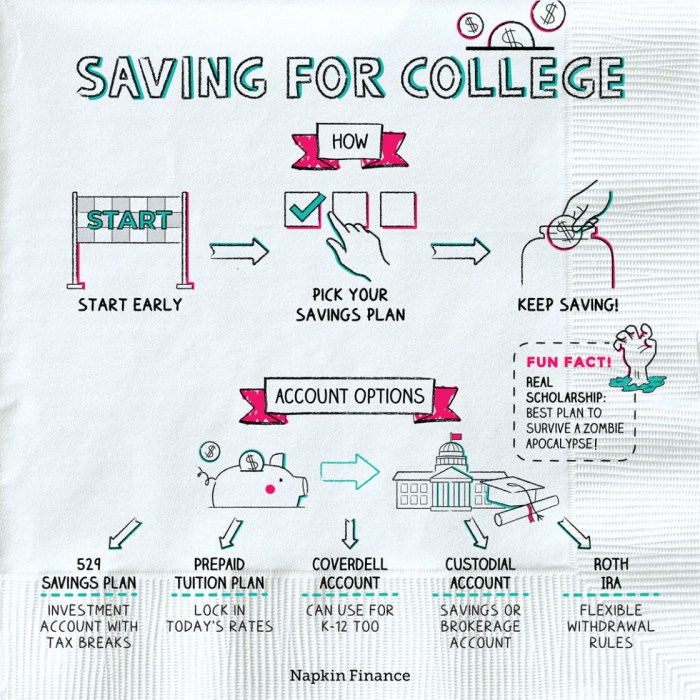
Investing early for college savings is crucial in order to take advantage of compounding interest over time. The sooner you start investing, the more time your money has to grow and the less financial strain you may experience when it comes time to pay for college expenses.
Comparison of Different Investment Options
- 529 College Savings Plan: A tax-advantaged investment account specifically designed for education expenses. Contributions grow tax-free and withdrawals are tax-free when used for qualified educational expenses.
- Coverdell Education Savings Account (ESA): Another tax-advantaged account that allows for contributions to grow tax-free. However, there are income limitations and contribution limits per year.
- Custodial Accounts (UTMA/UGMA): These accounts allow for more flexibility in how the money is used, as it is not restricted to educational expenses. However, once the child reaches adulthood (typically 18 or 21, depending on the state), they gain control of the funds.
Risks Associated with Various Investment Strategies
- Stocks: Investing in individual stocks can be risky, as the value can fluctuate greatly. It’s important to diversify your investments to reduce risk.
- Bonds: Bonds are generally considered safer investments, but they may not provide as high of returns as stocks.
- Mutual Funds: Mutual funds pool money from multiple investors to invest in a diversified portfolio of stocks, bonds, or other securities. While this can help reduce risk, there are still market risks involved.
Investment Advisor

When it comes to saving for college, an investment advisor plays a crucial role in providing guidance on where and how to invest your money wisely to reach your financial goals.
Qualifications and Certifications
- Look for an investment advisor who is a Certified Financial Planner (CFP) or Chartered Financial Analyst (CFA) as these designations require rigorous education, experience, and ethical standards.
- Check if the advisor is registered with the Securities and Exchange Commission (SEC) or the Financial Industry Regulatory Authority (FINRA) to ensure they are compliant with regulations.
- Consider their experience in college savings planning specifically, as this expertise can make a significant difference in achieving your objectives.
Choosing the Right Investment Advisor
- Ask for recommendations from friends, family, or colleagues who have successfully saved for their children’s education with the help of an advisor.
- Interview potential advisors to understand their investment philosophy, fee structure, and communication style to ensure it aligns with your preferences.
- Request a sample college savings plan to see how the advisor would approach your unique situation and tailor the strategy to meet your needs.
Investment Banking
Investment banking plays a crucial role in financing education by providing various services and products that can help individuals save for college expenses. These services can range from investment advice to the creation of tailored financial products designed to meet the specific needs of college savers.
Utilizing Investment Banking for College Savings
Investment banking services can be utilized for college savings by offering personalized investment strategies, access to a wide range of financial products, and expert advice on maximizing returns while managing risks effectively. By leveraging the expertise of investment bankers, individuals can create a diversified portfolio that aligns with their college savings goals.
- Personalized Investment Strategies: Investment bankers can help individuals develop customized investment strategies based on their risk tolerance, time horizon, and financial goals for saving for college.
- Financial Product Access: Investment banks offer access to a variety of financial products such as mutual funds, ETFs, and 529 plans that can help individuals grow their college savings over time.
- Expert Advice: Investment bankers provide expert advice on asset allocation, investment selection, and risk management to optimize college savings and achieve long-term financial objectives.
Investment Horizon
Investment horizon refers to the length of time an investor plans to hold an investment before needing to access the funds. In the context of saving for college, the investment horizon is crucial as it determines the appropriate investment strategy to achieve the desired savings goal.
Aligning Investment Horizon with College Savings Goals
- For short-term college savings goals (less than 5 years), consider low-risk investment options such as high-yield savings accounts or certificates of deposit to protect your principal.
- For medium-term goals (5-10 years), a balanced approach with a mix of stocks and bonds can help achieve growth while managing risk.
- For long-term goals (over 10 years), a more aggressive investment strategy with a higher allocation to stocks may be suitable to capitalize on growth potential.
Adjusting Investment Horizon Based on Changing Circumstances
- If your child is nearing college age and you have a shorter investment horizon than initially planned, consider shifting to more conservative investments to protect your savings.
- In case of unexpected financial windfalls or setbacks, reassess your investment horizon and adjust your portfolio accordingly to stay on track with your college savings goals.
Investment Opportunities
When it comes to saving for college, choosing the right investment opportunities can make a significant difference in reaching your financial goals. Let’s explore some different options and their pros and cons.
Stocks
Investing in stocks can offer high growth potential over the long term. By purchasing shares of companies, you can benefit from capital appreciation and dividends. However, stocks also come with a higher level of risk due to market volatility.
Bonds
Bonds are considered a safer investment option compared to stocks, offering a fixed income stream over time. They are less volatile but may provide lower returns. Bonds can be a good way to diversify a college savings portfolio and reduce overall risk.
529 Plans
529 plans are specifically designed for college savings and offer tax advantages. These savings plans allow your money to grow tax-free, and withdrawals are tax-free when used for qualified educational expenses. They provide a great way to save for college in a tax-efficient manner.
Real Estate Investment Trusts (REITs)
Investing in REITs can provide exposure to real estate without the need to directly purchase property. REITs generate income through rental payments and property sales, offering the potential for growth and diversification in a college savings portfolio. However, they can be affected by economic conditions and interest rates.
Investment Strategy
Investing for college requires a solid strategy to ensure that your savings grow over time and help cover the costs of education. Without a clear plan in place, you may not reach your financial goals efficiently.
Growth Investing
Growth investing involves selecting stocks or other assets with the potential for significant capital appreciation. This strategy focuses on investing in companies that are expected to grow at an above-average rate compared to the market. While this approach can be more volatile, it offers the potential for higher returns over the long term.
Income Investing
Income investing, on the other hand, prioritizes generating a consistent stream of income through dividends, interest payments, or rental income. This strategy is often favored by investors seeking stable cash flow to cover expenses, such as college tuition. While income investing may offer lower capital appreciation, it provides a reliable income source.
Value Investing
Value investing involves identifying undervalued assets that have the potential to increase in price over time. This strategy focuses on buying assets for less than their intrinsic value, providing a margin of safety. Value investors look for opportunities where the market has undervalued a company’s stock, offering the potential for significant gains when the market corrects itself.
Designing a Personalized Investment Strategy
When designing an investment strategy for college savings, it’s essential to consider your risk tolerance, time horizon, and financial goals. A personalized approach takes into account your individual circumstances and preferences, helping you build a portfolio that aligns with your needs.
In conclusion, Investment Advice for Saving for College serves as a comprehensive resource for individuals seeking to secure their financial future through strategic investments. By grasping the fundamentals of investment opportunities, strategies, and the role of investment advisors, you can pave the way for a successful college savings plan. Empower yourself with knowledge and take proactive steps towards a brighter tomorrow for you or your loved ones.
Answers to Common Questions
How important is it to start investing early for college savings?
Starting early allows your investments to grow over time and accumulate more funds for college expenses.
What are some common risks associated with investment strategies for college savings?
Common risks include market volatility, inflation, and potential losses depending on the chosen investment vehicles.
What qualifications and certifications should I look for in an investment advisor?
Look for advisors with certifications like CFP (Certified Financial Planner) and experience in college savings planning.
How can I align my investment horizon with my college savings goals?
You can align them by choosing investment vehicles with suitable timeframes that match your anticipated college expenses.
What are some examples of investment opportunities with growth potential for college savings?
Stock market investments, mutual funds, and ETFs are common examples that offer growth potential over time.


